


Por qué Estados Unidos necesita un auge de la productividad de la IA
Sin ella, la desaceleración del crecimiento de la fuerza laboral podría frenar el crecimiento económico futuro
Lectura de 5 minutos
PUNTOS CLAVE
- Las sólidas ganancias corporativas y la inversión continua en IA están respaldando el impulso económico a pesar de la incertidumbre geopolítica.
- La desaceleración del crecimiento de la fuerza laboral, impulsada por el envejecimiento demográfico y la inmigración más restrictiva, plantea un desafío creciente para la expansión futura.
- Impulsado por la IA Un posible aumento de la productividad podría ser fundamental para sostener el crecimiento y aliviar las presiones fiscales en los próximos años.
Las esperanzas de un acuerdo para poner fin al conflicto en Irán han sido una fuente bienvenida de alivio dentro de los mercados de capitales, incluso cuando persiste la incertidumbre sobre las principales áreas de desacuerdo. Aún así, a pesar del conflicto, las ganancias corporativas han sido espectaculares para comenzar el año y las estimaciones para 2026 y 2027 continúan aumentando. El auge de la inversión impulsado por el gasto de capital de inteligencia artificial (IA) muestra pocos signos de disminuir, y también vemos tendencias dentro de la economía de mejora en general.
Mirando más allá del conflicto en Irán, la capacidad continua de crecimiento de la economía estadounidense se basa en dos pilares principales, el tamaño de la fuerza laboral y las mejoras en la productividad. Nuestros gráficos de esta semana muestran mejoras en la productividad, mientras que el crecimiento de nuestra fuerza laboral se está convirtiendo en un viento en contra para el crecimiento. El gráfico superior muestra la combinación de los dos en varios períodos en el pasado. El gráfico inferior es un gráfico de barras del crecimiento de la productividad por año hasta 2010.
El crecimiento de la productividad es importante para que nuestra economía crezca mientras se mantiene a raya la inflación. Lo que también podemos ver en ambos gráficos, sin embargo, es que el crecimiento de la productividad es más cíclico que los cambios en la fuerza laboral. Esto tiene sentido ya que los avances tecnológicos, como el desarrollo de computadoras, teléfonos inteligentes, Internet e IA, no ocurren en una progresión fluida. En cambio, vemos que la productividad aumenta a veces y se ralentiza en otras.
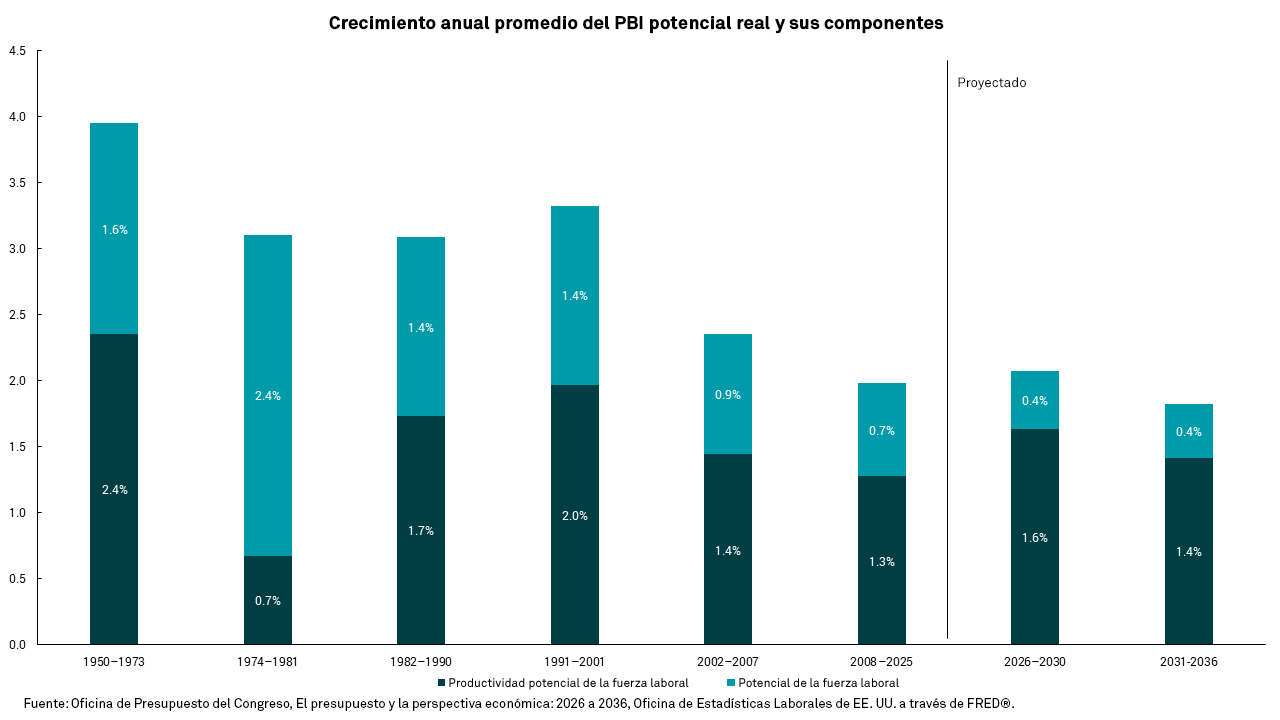
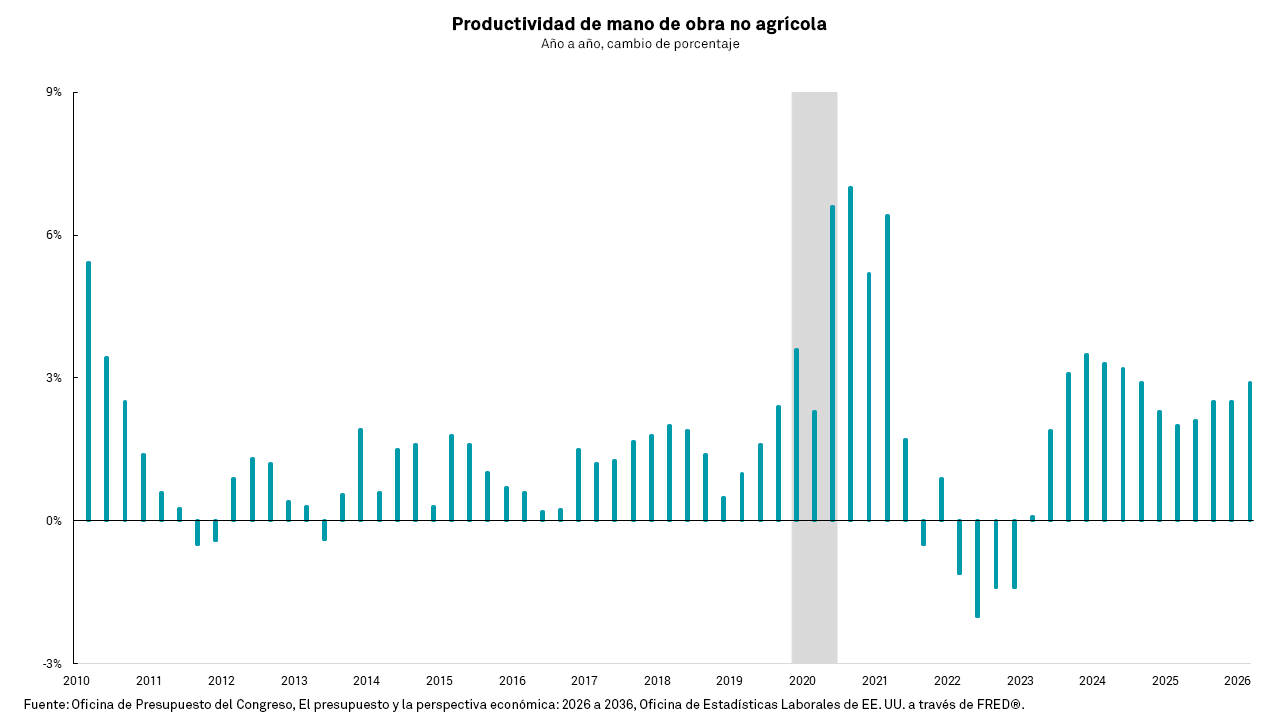
Nuestra sensación general es que el aumento de la IA brindará una oportunidad para un aumento generacional en la productividad. Si bien puede haber algunas implicaciones negativas para este cambio a medida que las empresas reasignan recursos de mano de obra a tecnología, las realidades de nuestra fuerza laboral pueden significar que vamos a necesitar que cada pedacito de la productividad prometida llegue a buen término. El gráfico superior muestra claramente la parte más pequeña que se espera que juegue el crecimiento de la fuerza laboral en comparación con el crecimiento de la productividad en comparación con períodos anteriores.
Tenemos dos vientos en contra para el crecimiento de la fuerza laboral, la fuente a largo plazo y más estable de un aumento en el producto potencial, trabajando a la vez. Nuestra demografía orgánica muestra que somos una población que envejece. La cantidad de personas de 65 años como porcentaje de nuestra población está creciendo, mientras que la cantidad de jóvenes de 17 años está disminuyendo. Esto alberga una perspectiva de una disminución de la fuerza laboral en edad productiva en los próximos años. Al mismo tiempo, las políticas de inmigración se han vuelto más restrictivas y podrían ralentizar el crecimiento de la fuerza laboral desde esa perspectiva. Pocos argumentarían que necesitamos el tipo correcto de política de inmigración, y esta área de política representa un gran desafío y una gran oportunidad.
La necesidad de crecimiento en el futuro es absolutamente vital. Nuestra posición fiscal será mucho más fácil de manejar si podemos hacer crecer nuestra economía. Tratar de reducir los déficits con una combinación de recortes de gastos y aumento de los ingresos será doloroso para todos. Las políticas que pueden conducir al crecimiento son una mejor opción. La IA es muy prometedora en el lado de la productividad; esperemos que nuestros líderes puedan reunirse para mejorar la perspectiva del lado de la fuerza laboral. Todos podemos beneficiarnos cuando lo hacen.
Obtenga By the Numbers en su bandeja de entrada.
Suscríbase (Se abre en una pestaña nueva)