

Qué hacer y qué no hacer cuando los mercados son volátiles
Cómo mantenerse firme, evitar errores costosos y mantener su plan a largo plazo en el buen camino
Lectura de 5 minutos
PUNTOS CLAVE
- Las reacciones emocionales ante las fluctuaciones del mercado suelen dar lugar a errores costosos, sobre todo cuando los inversores intentan predecir el comportamiento del mercado.
- Perderse solo algunos de los días de recuperación más fuertes del mercado puede reducir significativamente los rendimientos a largo plazo.
- Limitar los comportamientos reactivos y apegarse a un plan financiero puede ayudar a mantener los objetivos a largo plazo.
Cuando los mercados de valores están volátiles, es normal sentirse incómodo, especialmente si está viendo cómo el saldo de su cuenta de retiro sube y baja en medio de los titulares. Puede sentir la sensación de que es hora de ajustar sus inversiones en respuesta a los movimientos del mercado, pero ese instinto de actuar de manera reactiva es a menudo donde comienzan los problemas.
En cambio, el mejor movimiento es respirar y considerar por qué se siente incómodo, dijo Shane Delavan, gerente de mercado de patrimonio privado en BOK Financial®. También es miembro del Consejo de Mujeres y Patrimonio de BOK Financial. Él considera que las reacciones de los inversores están moldeadas por las circunstancias personales. "Todos tenemos nuestras propias 'historias con el dinero', y la volatilidad del mercado puede desencadenarlas, por lo que tomarse el tiempo para ese tipo de autorreflexión puede ser realmente útil", explica.
Sin esa autorreflexión, las fluctuaciones normales en el mercado pueden sentirse más significativas de lo que realmente son. Delavan dice que los tipos más comunes de inversores que luchan contra la volatilidad del mercado tienden a dividirse en tres grupos:
- Personas que están reaccionando a un entorno político específico o a eventos geopolíticos: Esto es cierto en todo el espectro político, señaló, explicando: "Si sus puntos de vista políticos no se reflejan en el entorno, será mucho más sensible a lo que está sucediendo y reaccionará con más fuerza a la volatilidad del mercado".
- Personas con experiencia limitada en el mercado: Los inversores que están menos familiarizados con los altibajos del mercado tienden a ser más reactivos a la volatilidad, independientemente del tamaño de sus inversiones, afirmó. Inversamente, los inversores que han vivido ciclos de mercado a menudo están mejor equipados para ver la volatilidad como algo temporal, en lugar de permanente.
- Personas que están pasando por una transición de vida: Ya sea un divorcio, la muerte de un cónyuge o una próxima jubilación, "generalmente se sentirán más vulnerables y eso puede llevar a una necesidad aún mayor de estabilidad. Un mercado financiero volátil puede ser una experiencia desafiante cuando se está en una posición de vulnerabilidad emocional", sostuvo.
El alto costo de reaccionar
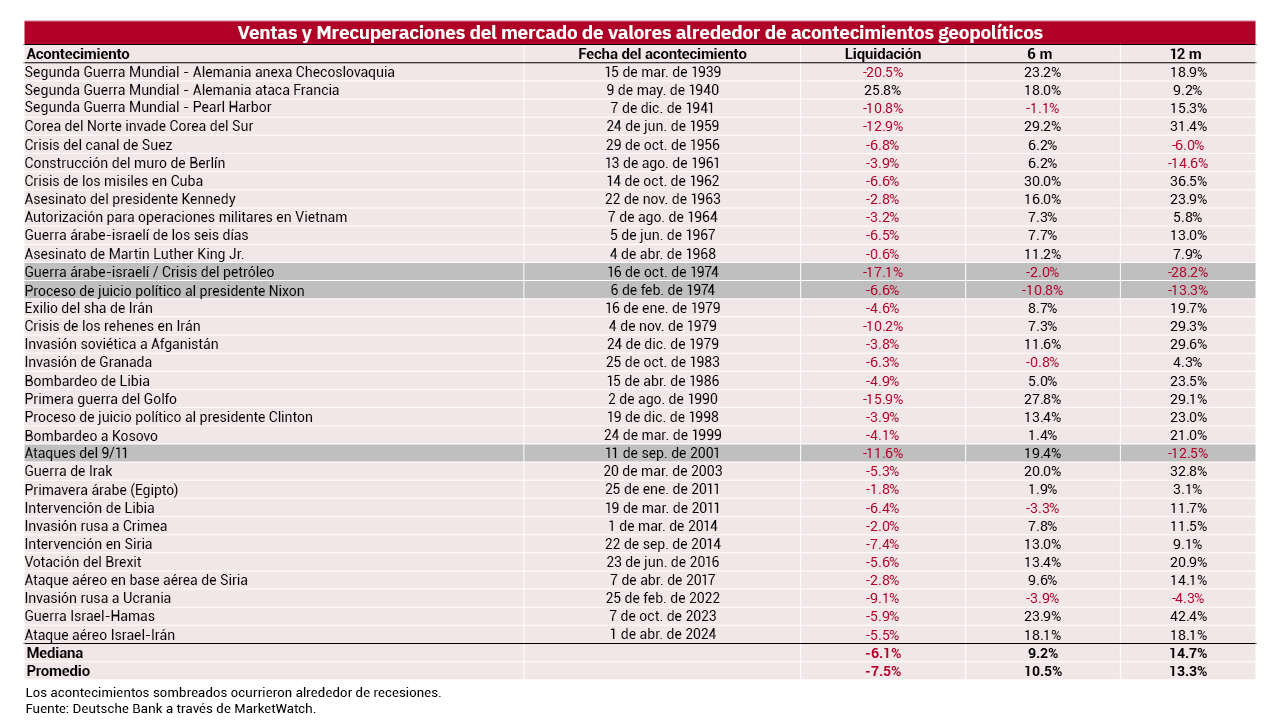
El movimiento del mercado de valores a corto plazo está impulsado por una serie de factores, desde eventos a corto plazo, como una crisis geopolítica, hasta factores económicos subyacentes, como la fortaleza del mercado laboral. Cuando el mercado cae en respuesta a un evento geopolítico, a menudo se recupera rápidamente y, a veces, a máximos mayores. Por ejemplo, como muestra el siguiente gráfico, el ataque aéreo entre Israel e Irán en 2024 provocó una venta masiva del mercado de valores del 5.5%, pero seis meses después, los mercados se habían recuperado un 18,1%.
Algunos inversores reaccionan a estas ventas masivas tratando de cronometrar el mercado, es decir, con el objetivo de vender en el momento adecuado y luego esperar el momento "perfecto" para volver a entrar. Sin embargo, hacerlo puede ser costoso, advirtió Delavan.
"Puede evitar algunas pérdidas cuando vende activos financieros en una desaceleración del mercado", dijo. "Pero el desafío es que la mayoría de los inversores tienen una alta probabilidad de perderse gran parte de la recuperación del mercado porque esos días fuertes ocurren rápidamente". Y esos días fuertes tienden a llegar cuando la incertidumbre aún es alta, antes de que muchos inversores se sientan cómodos dando un paso atrás.
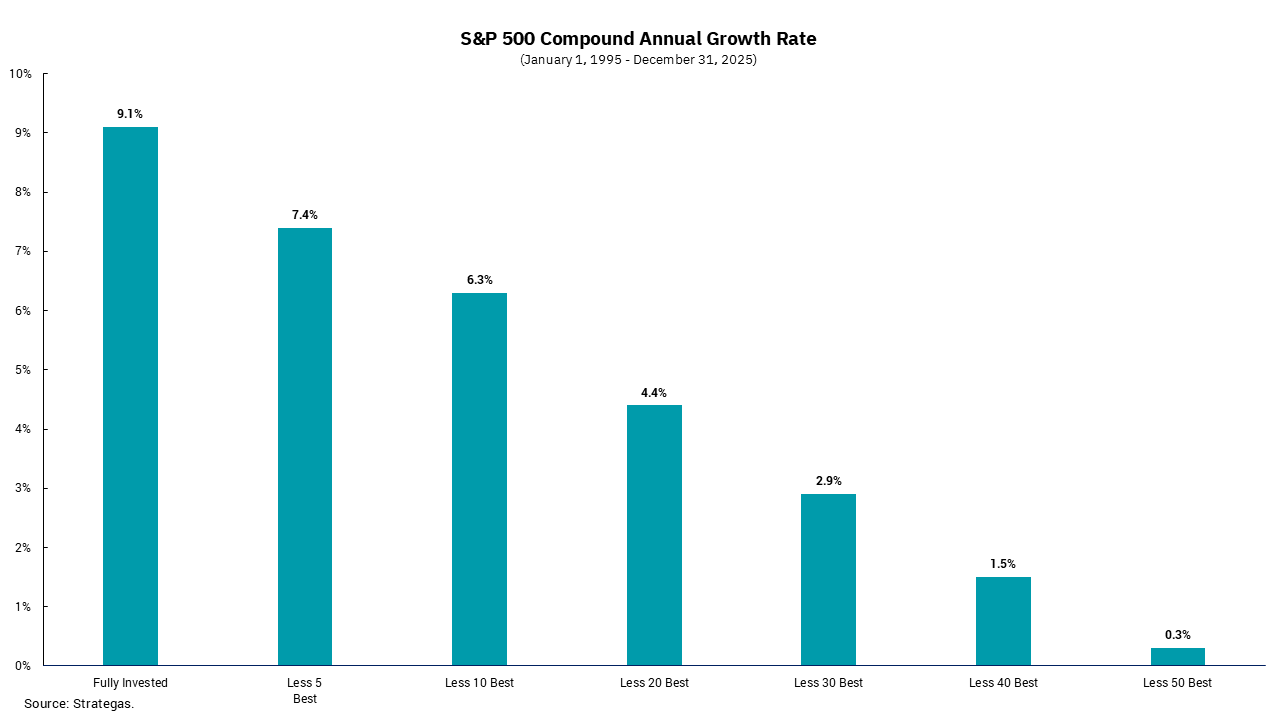
Para agravar la dificultad de cronometrar el mercado, algunos de los días más fuertes del mercado ocurren durante períodos de volatilidad. En consecuencia, salir del mercado, aunque sea brevemente, aumenta el riesgo de perder estas ganancias, lo que puede tener un impacto duradero en los rendimientos generales. Por ejemplo, perder incluso los cinco mejores días de los rendimientos del S&P 500, da como resultado una tasa de crecimiento anual compuesta del 7,4% durante un período de 30 años, en comparación con el 9,1%, si el inversor hubiera permanecido totalmente invertido, según el gráfico a continuación.
Cómo mantener la calma en momentos de volatilidad
Cuando los mercados se muestran inestables, pequeños cambios en el comportamiento pueden marcar una gran diferencia en la forma en que responde a la volatilidad. Delavan ofrece los siguientes consejos:
- Haga una pausa antes de reaccionar: "Toma un respiro", dijo. "Trata de entender qué está impulsando tu respuesta emocional". Crear espacio antes de actuar puede ayudarlo a evitar decisiones arraigadas en el estrés a corto plazo o experiencias pasadas.
- Limite la exposición constante a las noticias: Alejarse del flujo constante de titulares puede ayudarlo a mantener la perspectiva. Como dijo Delavan: "las noticias están diseñadas para llamar la atención y eso puede hacer que las personas sean más reactivas emocionalmente".
- Revise su portafolio con menos frecuencia: Un monitoreo menos frecuente reduce la probabilidad de reaccionar a cada movimiento. "Si sabes que podrías reaccionar emocionalmente, no lo revises a diario. Revise su portafolio trimestralmente, o como máximo mensualmente", aconsejó.
- Concéntrese en el impacto en la vida real: Delavan sugiere hacerse una pregunta simple: "¿Esto va a afectar mi nivel de vida?" "Si la respuesta es no, vuelva a enfocarse en el largo plazo", dijo.
- Cree un colchón financiero: reservar fondos para necesidades a corto plazo puede ayudar a reducir la presión para vender durante las recesiones, afirmó.
- Hable con un asesor de confianza: una perspectiva objetiva puede ayudarlo a mantenerse alineado con sus objetivos cuando las emociones están a flor de piel.
- Tenga (y cumpla) su plan financiero: En lugar de reaccionar al movimiento del mercado, tener un plan financiero puede proporcionar orientación, lo que ayuda a garantizar que las decisiones permanezcan vinculadas a objetivos a largo plazo en lugar de incertidumbre a corto plazo. "Un plan financiero te da un marco", dijo Delavan. "Te ayuda a mantenerte enfocado en lo que estás tratando de lograr".
Cuándo puede tener sentido ajustar su estrategia
Al mismo tiempo, mantener la inversión no significa no hacer nada; significa tomar decisiones por las razones correctas, no reactivas. Esto plantea la cuestión de si alguna vez tiene sentido reaccionar a la volatilidad del mercado.
La respuesta es: sí, a veces. Como dijo Delavan, "los cambios en las circunstancias de la vida son realmente la razón más probable por la que recomendaríamos ajustes". Estos cambios pueden incluir la proximidad al retiro, un aumento o disminución de sus ingresos o gastos o la evolución de sus metas financieras. Es importante destacar que cualquier ajuste en sus inversiones debe ser medido, no drástico, para que su portafolio continúe respaldando sus objetivos a largo plazo.
Conclusiones
La volatilidad del mercado es incómoda, pero también forma parte de la experiencia de inversión, por lo que es importante mantener una perspectiva a largo plazo.
Y entonces, lo que más importa no es evitar la volatilidad por completo; es mantenerse disciplinado cuando sucede. En palabras de Delavan, "en la mayoría de los casos, las personas que mantienen la inversión y se mantienen enfocadas en sus objetivos son las que salen adelante".